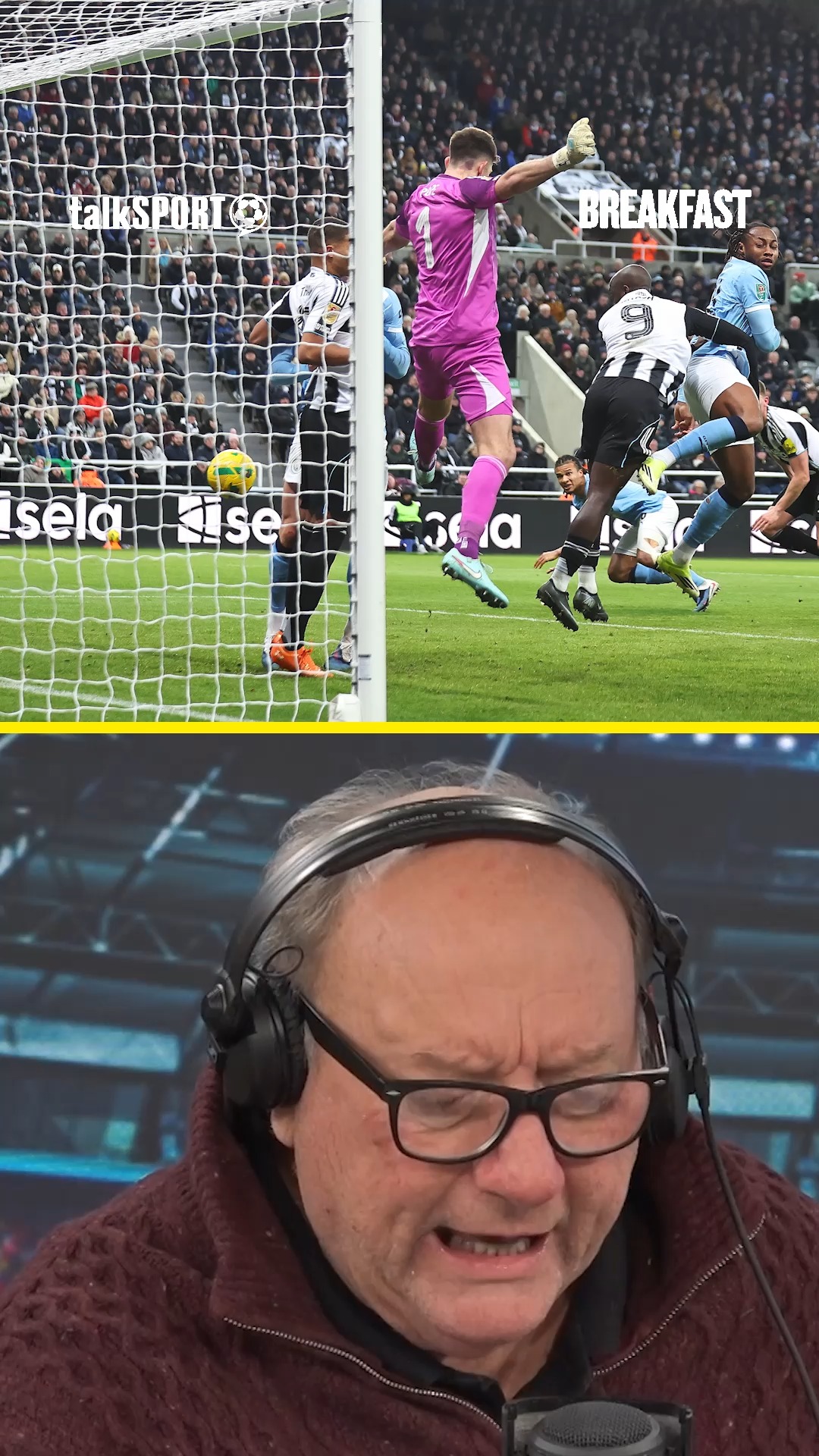
McCoist Slams VAR Over Missed Aberdeen Penalty vs PAOK: A Call for Consistency
The world of football has long grappled with the introduction of the Video Assistant Referee (VAR), a technology intended to eliminate clear and obvious errors from the beautiful game. Yet, time and again, it seems to generate as much controversy as it resolves. This sentiment was vehemently echoed by legendary Scottish striker and pundit Ally McCoist, who recently expressed his profound dismay following a pivotal UEFA Europa Conference League match where Aberdeen were seemingly denied a clear penalty against Greek side PAOK. McCoist's frustration, widely encapsulated by the phrase "
mcCoist slams var," stemmed from a glaring inconsistency that he believes undermines the very purpose of the technology.
The match in question saw Barry Robson's Aberdeen side in Group G appear to be on course for a crucial victory, holding a comfortable 2-0 lead thanks to impressive strikes from Bojan Miovski and Dante Polvara. However, what unfolded in the final seventeen minutes was a dramatic collapse, with PAOK staging a stunning comeback. Goals from Kiril Despodov and Vierinha drew the visitors level, before a VAR-awarded penalty for a foul by Slobodan Rubezic allowed Stefan Schwab to bag the winner for PAOK. While VAR intervened for PAOK, the glaring omission was its failure to award Aberdeen a penalty for what many, including McCoist, considered a blatant foul on Jack MacKenzie by the very same Vierinha. This incident became the focal point of McCoist's impassioned critique, reigniting the debate over VAR's inconsistent application and its impact on the integrity of the sport.
The Europa Conference League Drama: A Tale of Two Penalties
The fixture between Aberdeen and PAOK was a rollercoaster of emotions, particularly for the home fans at Pittodrie. The Dons, seeking their first win in Group G, had produced a scintillating performance for much of the game. Bojan Miovski’s opener and Dante Polvara’s second goal had put them in a commanding position, sending hopes soaring for a crucial European triumph. However, the tide turned dramatically in the closing stages. PAOK’s Kiril Despodov initiated the comeback, followed by an equaliser from Vierinha, setting the stage for a tense finale.
The decisive moment arrived when VAR intervened to award PAOK a penalty after reviewing a foul by Aberdeen's Slobodan Rubezic. Stefan Schwab coolly converted the spot-kick, securing all three points for the Greek side and leaving Aberdeen rooted to the bottom of the group with just a single point. While the VAR decision for PAOK was accepted, the true controversy lay in what happened—or rather, what *didn't* happen—moments earlier. A robust challenge by former Portugal international Vierinha on Aberdeen's Jack MacKenzie in the box appeared, to many observers, to be a clear penalty. Yet, despite the presence of VAR, the incident was not reviewed, leaving Aberdeen and their supporters bewildered and furious. This blatant disparity in VAR's application ignited the fuse for Ally McCoist's scathing assessment, creating a narrative of unfairness that overshadowed an otherwise thrilling football match.
Ally McCoist's Vehement Critique: "Complete and Utter Lack of Consistency"
Speaking with TNT Sport after the match, Ally McCoist did not mince words. His frustration was palpable, articulating a sentiment shared by countless football fans globally regarding the perplexing and often infuriating application of VAR. For McCoist, the most egregious aspect was not merely the missed call, but the stark contrast in VAR’s intervention – awarding one penalty while conspicuously ignoring another, equally clear, incident.
"It was a penalty," McCoist stated emphatically regarding the foul on Jack MacKenzie, adding, "but how they never gave the other one is beyond me. This is the problem we have, it's a complete and utter lack of consistency." This statement cuts to the heart of the VAR debate. While the technology is designed to eliminate subjectivity and human error, its implementation frequently introduces new layers of inconsistency, leading to scenarios where similar incidents are treated differently within the same game, let alone across different matches or leagues.
McCoist further elaborated on the fundamental flaw in VAR's current operation: "If you don't have VAR, you can one hundred per cent accept people's mistakes...referees and officials are going to make mistakes. When you have VAR right in front of you, and you're seeing it six or seven times. That's my problem." This highlights a crucial distinction: before VAR, a referee's error was often seen as part of the game's human element. With VAR, officials have multiple replays and angles, making a missed "clear and obvious" error almost unforgivable. As McCoist powerfully put it, "In everyone's eyes it's the wrong decision, look at that. Bam. It's a penalty...there's no excuse for the officials looking at VAR not to see that. It's beyond me, they're looking at it two or three times..for the life of me I don't know what they're seeing." This absolute disbelief underscores the sentiment that the VAR system, when failing to correct obvious errors, becomes more detrimental than helpful, eroding trust in the officiating process. McCoist's candid remarks underscore the significant challenge VAR faces in achieving its intended purpose, a point he often makes as highlighted in articles like
McCoist Exposes VAR Problem: No Excuse for Missing Clear Aberdeen Foul.
The Troubling Paradox of VAR: When Technology Fails Transparency
The incident involving Aberdeen and PAOK is a stark illustration of the inherent paradoxes within the VAR system. Introduced with the noble intention of ensuring fairness and rectifying "clear and obvious errors," VAR often finds itself embroiled in controversies that question its very efficacy and consistency. The technology, theoretically, should bring an objective lens to subjective on-field decisions. However, the human element within the VAR booth, coupled with often vague guidelines, frequently leads to applications that are anything but objective or consistent.
The "clear and obvious" error threshold itself is a major point of contention. What one VAR official deems "clear and obvious" another might not, leading to a frustrating lack of uniformity across games, leagues, and even within the same match, as McCoist meticulously pointed out. This subjectivity in interpretation undermines the promise of technological neutrality. Furthermore, the delays associated with VAR reviews often disrupt the flow of the game, impacting player momentum and fan experience. The lack of transparent communication regarding decisions – why a foul was reviewed and another wasn't, or the rationale behind the final call – only fuels frustration and suspicion.
This inconsistency breeds mistrust. Fans and players alike become cynical when they see VAR intervene for minor infringements in one game, only to ignore a seemingly egregious foul in another. This erodes faith in the officiating and, by extension, in the fairness of the competition. The psychological impact on referees, who are often hesitant to make big calls knowing VAR is watching, can also be detrimental, sometimes leading to over-reliance or, conversely, stubborn adherence to an initial incorrect decision without sufficient review. McCoist has repeatedly articulated this concern, lamenting VAR's broader impact on the game's integrity, a sentiment explored further in articles such as
Ally McCoist Rages at VAR's "Lack of Consistency" After Aberdeen Drama. The technology, meant to be a solution, has become a problem in itself when its application lacks the very consistency it was designed to promote.
Beyond Aberdeen: Solutions and the Future of VAR
The controversy surrounding the Aberdeen vs PAOK match serves as another clarion call for urgent improvements to the VAR system. While the aspiration behind VAR is commendable, its current implementation leaves much to be desired. The central challenge lies in harmonizing the objective capability of technology with the inherently subjective nature of football decisions, all while maintaining the game's flow and excitement.
So, what are some practical steps and insights for enhancing VAR's effectiveness and restoring faith in its application?
1. **Clearer Guidelines and Training:** The "clear and obvious error" threshold needs more precise, globally consistent definitions. VAR officials require enhanced, specialized training that focuses on consistency in decision-making across various scenarios, perhaps leading to dedicated VAR referees rather than active field referees rotating through the booth.
2. **Increased Transparency:** Following successful models in other sports (e.g., rugby's TMO), in-stadium announcements explaining the VAR decision-making process, including audio from the referee and VAR official, could significantly reduce frustration and confusion among fans. This would demystify the process and build trust.
3. **Limited Review Opportunities:** Implementing a "challenge system" similar to tennis or American football, where each team is allowed a limited number of challenges per game, could empower teams while preventing excessive stoppages and focusing reviews on truly contentious incidents that the teams themselves feel were incorrectly judged.
4. **Technological Refinements:** Continuous investment in camera technology and review systems to ensure the highest quality of footage and the quickest possible review times is essential. Exploring semi-automated offside technology, already seen at major tournaments, is a step in the right direction for more objective calls.
5. **Focus on Key Match-Changing Moments:** VAR's intervention should ideally be reserved for goals, penalties, red card incidents, and mistaken identity. Excessive involvement in marginal decisions, especially for offsides that don't significantly impact play, can detract from the game's spirit.
Ultimately, the future of VAR hinges on its ability to evolve from a source of frustration to a truly trusted tool. The goal must be to strike a delicate balance: leveraging technology to correct egregious errors without sanitizing the human element and unpredictable nature that makes football so captivating. Learning from incidents like the missed Aberdeen penalty and taking proactive steps for improvement are crucial for ensuring that the spirit of fair play prevails and that decisions are made with the consistency and transparency that Ally McCoist and fans worldwide rightfully demand.
The journey of VAR has been fraught with challenges, but the potential for a fairer game remains. By addressing the critical issues of inconsistency, transparency, and clarity in application, football can move towards a future where VAR is genuinely seen as an asset, not an antagonist, ensuring that dramatic comebacks are celebrated for their sporting prowess, not marred by officiating controversies.